Read More

Code and other updates


We pushed a lot of code to our Github ( https://github.com/Nuand/bladeRF/ ) this past week, but we still have a lot left to release. As the software development wraps up, we will begin to focus much more on tutorials and documentation for the platform.

We also got our hands on an Agilent EXA which complements our MXA’s functionality quite well, so expect to see some interesting measurements and captures by this time next week! Lastly, we were informed by our manufacturer that we would be told the exact production run completion date around June 17; things are still on track for being assembled before the end of this month.
 

Read More

May Update


This was a rather uneventful week as we are waiting for the boards to finish getting assembled. We are also waiting on another MXA to be delivered so we can calibrate and showcase the bladeRF at peak performance. So keep your eyes peeled for some fun and interesting demos right before your boards arrive!

Read More

bladeRF EVM


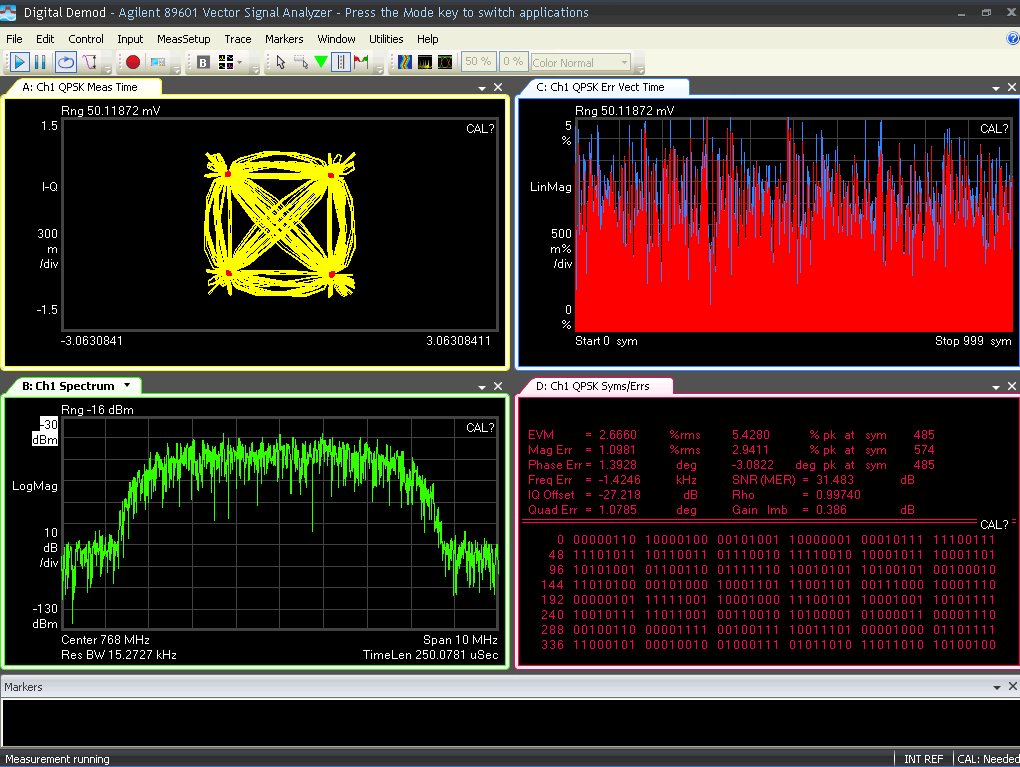
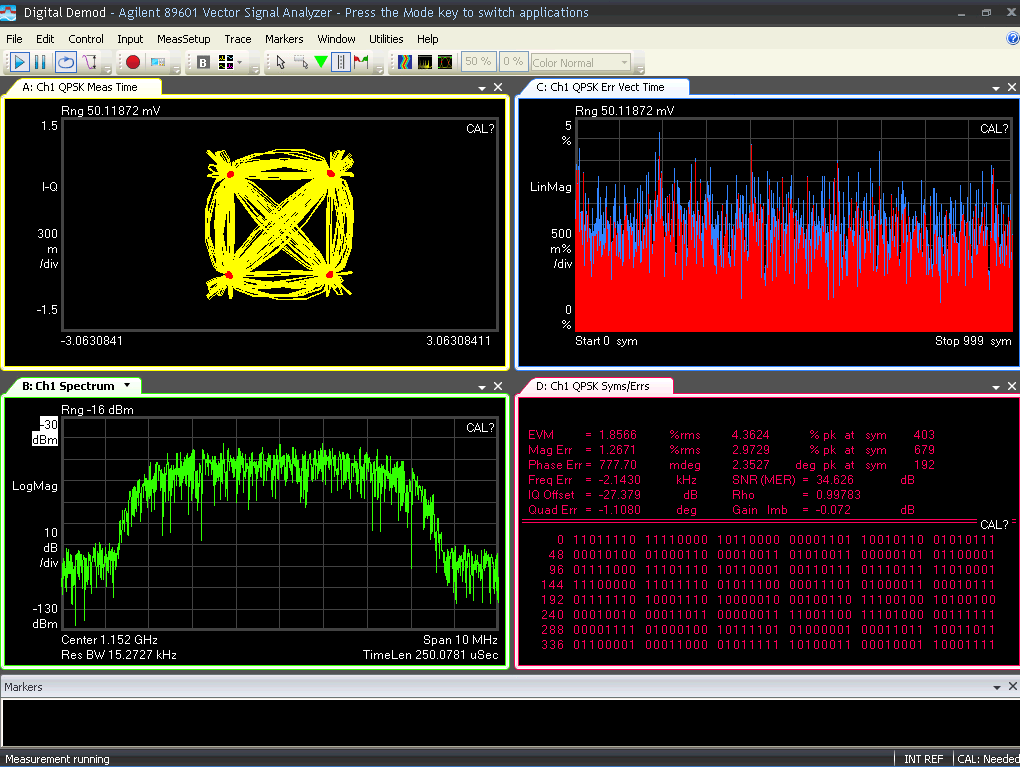
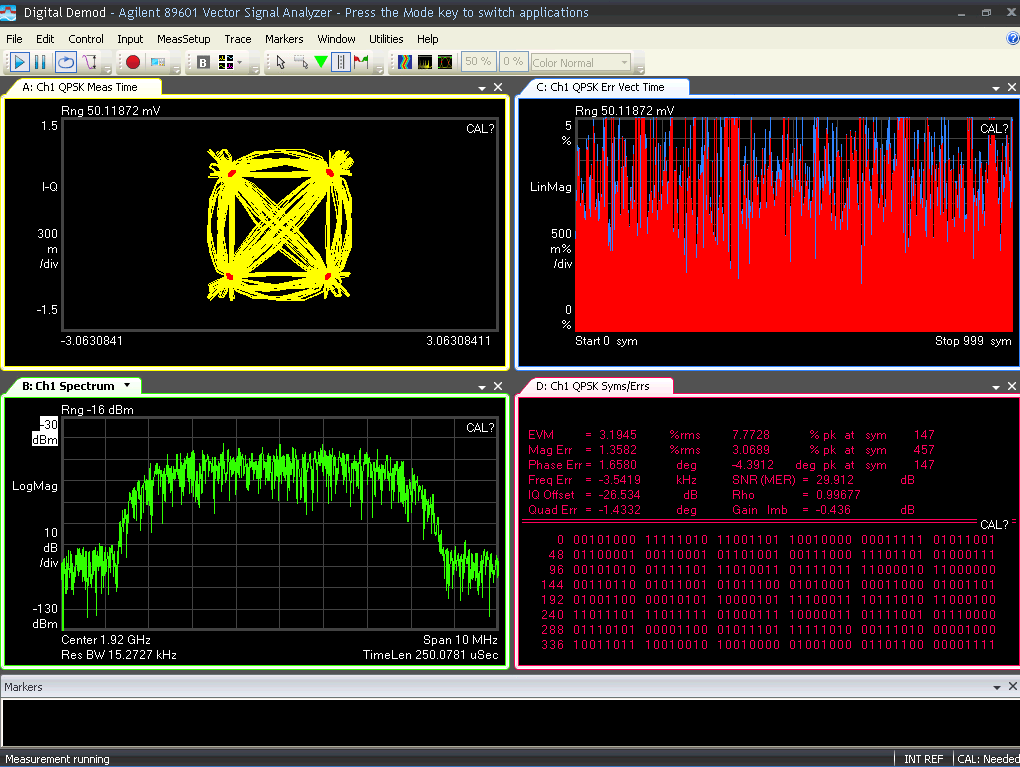
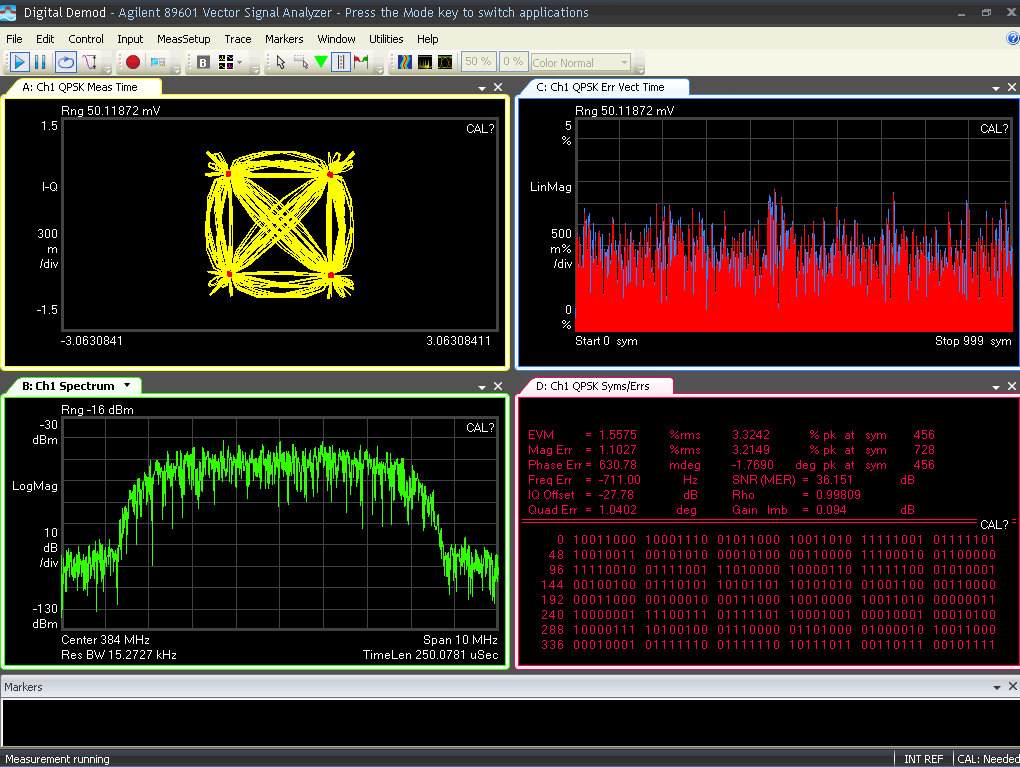
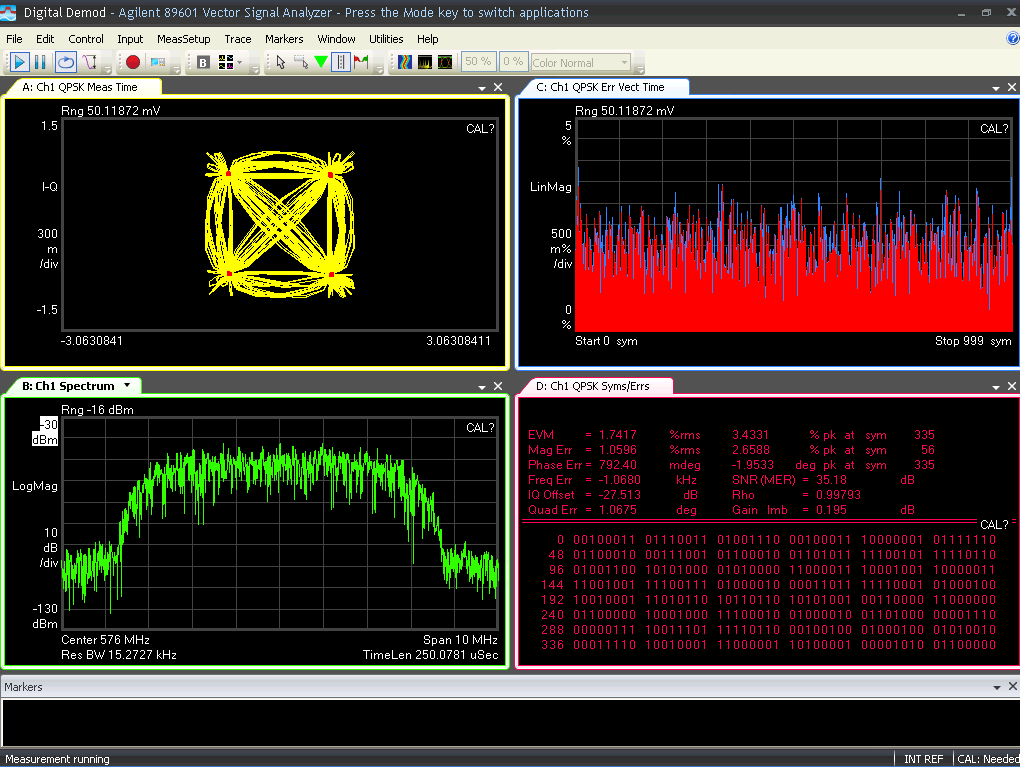
We spent most of this week conducting RF calibration and collecting EVM measurements.

The output coming out is a 10MHz occupied bandwidth QPSK signal passed through a root raised cosine filter at 4.8MSPS and a 28MHz reconstruction filter.

The LOs were specifically chosen to be multiples of 38.4MHz (which is the fundamental frequency of the on-board VCTCXO) so that we could test the signal and identify any clock spurs. Fortunately, there don’t appear to be any spurs.

We have gathered enough data and experimented enough to figure out how to best calibrate these devices. Although the current EVM is very good, there still exist many other low hanging fruit that should let us push the EVM even lower.


LO at 384MHz

LO at 384MHz


LO at 576MHz

LO at 576MHz


LO at 768MHz

LO at 768MHz


LO at 1152MHz

LO at 1152MHz


LO at 1920MHZ

LO at 1920MHz